Search This Blog

Monday, July 31, 2006

School Uniform

In Indonesia students of kindergarten, elementary school, junior high school and senior high school have to wear uniform to go to school.

When I was in elementary school, 1974-1980, I remember each school had their own policy to decide the style, the color of the uniform and the days to wear the certain uniform. In July 1980 when I started my junior high, I still wore the different color of the uniform for my school. People could easily recognize someone as a student of a certain school from the color of the uniform, without seeing the badge of the school

In 1981, the government started to apply a policy that decided the color of the uniform for each level. Elementary school students had to wear white shirt and red skirt/shorts. Junior high school students had to wear white shirt and black blue skirt/shorts. Senior high school students had to wear white shirt and sky blue/trousers. This policy was mostly applied in state schools. Private schools were free to decide for their own students.

The main reason why students have to wear uniform to go to school, in my opinion, is to reduce the gap between the haves and the haves-not. Rich or poor, the students wear the same kind of clothes, the color, the style, and also the material when going to school. Parents do not need to provide many clothes for the children to go to school. Perhaps wearing uniform will also make the students look neat so that the teachers will be happy to see it. LOL.

In fact, the school also has a rule how long the skirt is for the girls; but not now long/short for the shorts and the trousers for boys. LOL. For the girls, their skirt must be 5-7cm under the knees. I remember during my first days in senior high school, my schoolmates mocked me for wearing such a “too long” skirt, coz following the rule. They said, “That girl is wearing her mother’s skirt.” LOL. And as a rule, teenagers listen to what their friends say more than what their parents say. LOL. It made me argue with my mom. She insisted that I follow the rule, while I felt embarrassed to go to school. At last, I hemmed my skirts by myself after I won the arguments with my mom. LOL.

Some weeks ago when taking Angie to a tailor to have her school uniform made, I didn’t find any difficult situation. Angie agreed with me to have her skirt made 5 cm under her knees, and for the sleeves 5 cm above the elbow. However, when taking the uniform, Angie complained to me coz the skirt was too long, and sleeves were too long too. She pleaded to me, “Mom, my friends will laugh at me wearing this too big skirt and shirt!!” I remember my own experience in 1983, LOL. I gave in. LOL. I asked the tailor to fix it as what Angie wanted.

Recently, many serials on television made by local producers showing the story of teenager life. The characters in those serials usually wear a knee-long skirt, and shirt with very short sleeves. I seldom watch television so I don’t realize how big the impact of this phenomenon. In order to look “modern”, students love to imitate the way the “students” in the serials get dressed. And in order to follow the trend, Angie begged me to listen to her pathetically. LOL. And as a democratic mother, I always open a healthy discussion with Angie and we will find the way out together.

However, since we live in a community where people judge other people only by the clothes, sometimes, I know people will easily judge the students to wear such “modern” style of the uniform as “immoral” ones. I must say that sometimes I am fed up with this “fossilized” way of thinking of people—reducing women only as a pile of flesh and bones.

With so many people still have this way of thinking in Indonesia, I am wondering when people will fairly see a woman. In academic situation, of course it is not appropriate to view women only from the skin, it must be from the inside of her brain. In “beauty pageant” situation, perhaps it is appropriate to view women highly only from the way they get dressed and their outer performance. LOL.

PT56 18.55 300706

https://media.hitekno.com/thumbs/2022/03/07/63876-foto-anak-sma-di-tahun-90-an-ini-menarik-perhatian-netizen-instagram-mazzini-gsp/730x480-img-63876-foto-anak-sma-di-tahun-90-an-ini-menarik-perhatian-netizen-instagram-mazzini-gsp.jpg
foto ditambahkan dari link ini


Gatherings


I just read an article in a local newspaper about some women who are “crazy” for joining any gathering. The main reason is that they need to socialize with other people. Other benefits to such activity are they will get more friends—in some certain time friends can be like family members--, they will get more business clients, and sometimes they also can get financial aid.

In Indonesia, especially in the scale of neighborhood, it is very common for women to have such a gathering. And it is especially for women who have got married. They meet once a month in one member’s house. Some things they usually do are (1) collecting some money; after the money is collected, they will do lucky draw to decide who will get the money, (2) the head of the neighborhood will give some information related to the need of the housewives, sometimes it is related to the welfare of the toddlers, (3) some neighborhood gatherings have cooperatives that offer the members to rent some money or some daily needs (such as rice, sugar, flour, frying oil, etc.)

This kind of gathering is for married women, and I recognize that in this community women are no longer addressed using their own names, they already become “Mrs. X”. I read it as the “killing of the old self of women”.
 
Such gathering also happens in many companies. Again, mostly this is for the wives. The husbands work in the companies, the wives get to know each other via this gathering.
 
Once, a private student of mine who joined a fitness center told me that she and her gym friends also have such gatherings. And from the article I read this morning, I found out that there are many other kinds of gatherings—mostly have women as the members.
 
When I was a kid, I didn’t find it strange to see my mother attending such gatherings. I saw it as a “normal” thing to do. She has four children, a fulltime housewife, and she had one housemaid at home. Absolutely she had some free time to do that. Besides, I also saw it as she did some social jobs, such as visiting the orphanage and the house for the elderly with her gathering friends, etc.
 
After I got married and my mom forced to join one gathering in our neighborhood, I realized that in fact I felt reluctant to do that. With the neighbors calling me as “Mrs. X”, I felt more unease. I had to lose my old self as single Nana.  Besides, different from my mom who is a fulltime housewife, I am an employee. With my teaching schedules mostly done in the evening, I often couldn’t join the gathering. And in fact, it aroused a new problem, at least for me, the neighbors started to “see me differently” as someone very busy. They mostly still stick to the old principle of course that women’s place is at home, if a woman works, she had better not do it until late; women are not supposed to work until evening, coz evenings are time for the family. Some neighbors started to “greet” me, “Always busy, eh? Much money then? What if your husband is not satisfied with your being busy like that?” bla bla bla … It made me feel they violated my rights to work, and also to do any other thing to my heart’s content, as long as I don’t harm other people. What did they know about my life?

So, instead of seeing such gathering as beneficial, I saw it as something useless. Some members tend to gossip about the other members. Sometimes it got worse by making the members ‘categorized’ into some groups; one group dislike the others and vice versa. Some members tend to show off what they have to the others.
 
One workmate of mine who got married some years ago and started to live in a rented house in one neighborhood and join such gathering there also felt fed up with it. “It is very useless for me to join such a gathering.” She said to me some weeks ago. However, she still remembered that her mother warned her to join such a gathering coz “It is very beneficial.” But she didn’t see the benefits for herself.
 
For fulltime housewives, perhaps it is a good thing to do. For employees, like my workmate and me, we already socialize with our workmates, with our students, private students, so we no longer need to spare some time to attend the meetings of such gatherings in the neighborhood. We still can be good neighbors without joining it, as long as we don’t do any harm to the others.
 
PT56 18.09 300706

Friday, July 28, 2006

The Patriarchal Culture

After Angie became a teenager these recent years, I recognized that she often looks uncomfortable when we are going somewhere and guys take a look at us. She often rushes me to leave a certain place when she recognizes that a guy or a group of guys take a look at us.

Some hours ago, we just had dinner in one food stall. A group of four guys sat nearby. I never give a damn to any guy looking at me. Perhaps becauseI have problems with my poor eyesight (I am very lazy to wear my glasses when I am not in front of the computer) so that I don’t have a good look at people around me. I cannot recognize then whether they look at me abusively or just curiously. Therefore, it often makes me ignorant to people around when I am in public places. However, I could feel that those four guys once in a while looked at Angie and me. I could ignore it but Angie couldn’t. After we finished our meal, she directly rushed me out of the food stall to escape.

This reminds me of one article I read in Aquarini’s book—Kajian Budaya Feminis (Feminist Culture Studies). She wrote most women undergo sexual harassment in their life; be it a very “light” harassment such as ‘whistling’ until “heavy” one such as touching or rubbing some parts of women’s bodies when they are in public places. Women are often reduced only as “a pile of flesh and bones” without soul so that women easily become victims for such sexual harassment done by men. Men “wholeheartedly” feel like they have full right to do anything they like to women because women are just “a pile of flesh and bones”; just objects. Men don’t need to feel guilty to do harassment because they are superior. On the contrary, women who get sexual harassment often feel that something wrong in them so that they deserved to be “enjoyed” by men. Perhaps they feel that they have big breasts, big ass, or oven on the way round, skinny breasts and skinny ass. Women with big “ones” get sexual harassment while women with skinny “ones” get mockery. It is always wrong to have female bodies.

Lucky Aquarini because she could overcome that feeling when she was young. She could convince herself that there was not anything wrong in her that made some boys abuse her. When I was in elementary school and got sexual abuse from the boys in the classroom next door, I could just run away and hide myself. Sometimes I complained to God why my breasts grew earlier than my classmates so that those boys nicknamed me, “mountain”, very ridiculous and annoying nick for me at that time.

I still brought that upbringing—that women’s bodies are the source of sin—until I found the answer in the feminism ideology, in 2003. I believe it was coz the very strong religious upbringing I got from my parents and teachers in elementary school, also from the patriarchal culture where I was raised.

I have told Angie to take it easy when there is a guy or a group of guys take a look at her greedily. There is nothing wrong in her. Something wrong is in those guys’ minds. However, Angie still acts the same.
I always dream to have a better world where men no longer consider women as sexual objects. That some women can do the similar thing—reduce men only as sexual objects—doesn’t guarantee that it has already made it equal.

PT56 23.17 260706

Tuesday, July 25, 2006

Family Name 2

My parents are cousins so that they have the same family name, “Podungge”. This family name is somewhat strange to Javanese people’s ears so that my family sometimes had funny stories coz of this family name. When I was a kid, realizing that this family name was very strange, I was happy to know that this family name was not put behind my name in the birth certificate so that at school, my friends only knew me as “Nurhayati”. Kids here sometimes like to play jokes on parents’ names and it can be very offensive sometimes.

One day in 1970s, I sent a letter to my cousin living in Gorontalo, North Sulawesi, and I addressed her as, “Dearest Hilma Podungge”. My mom corrected me by saying, “She is not a Podungge.” Seeing me confused, she explained that her sister—my cousin’s mother—married to a man with different family name. I was wondering why my cousin should use her father’s family name and cannot choose to use her mother’s?

When reading Saman—a novel written by Ayu Utami, a feminist writer in Indonesia—I found Ayu’s witty criticism on this family name. Shakuntala—one main character in the novel—got difficulty to arrange her documents to study abroad coz she didn’t want to fill in the family name’s column. Her bad relationship with her father made her “kill” the father. At last, to compromise, she divided her name into two; Shakun as the first name, and Tala, as the family name. “Why should my father always follow me wherever I go during all my life? Can’t I live in peace without being related to my father?” this was a question uttered by Ayu Utami via her character in the novel.

Well, as long as there is no violence to women in using this family name, I don’t find it hurtful. However, when knowing in some certain ethnic groups of Indonesia that a woman is forced to bear many babies until she can “produce “ a baby son to pass on the family name, I object very much why a child cannot choose to use the mother or the father’s family name.
Suddenly, I really appreciate my late father’s choice not to include the family name behind my name in the birth certificate. I don’t belong to my father. LOL.
PT56 13.19 250706

What is in a name?

“What is in a name?” Shakespeare said. However, I oftentimes think that it is very interesting to know the history why someone is named X or Y. when having a new class with new students, I often ask my students the history of their names; especially if some of them have unique names to me. I often feel curious when they say that they don’t know anything about the history of their names coz their parents never tell them whether there is really a special event preceding the birth of the babies.
I always love to tell my students, and also people who are curious to know the history of my name.

I am the first daughter of my parents after they had two sons before me (unfortunately the first son died when he was around five months old coz of a very serious disease). My mom told me that my dad was very excited to have the first baby daughter so that he called me “Nona”. Nona means a girl, not married yet. After my parents decided to give me a full name “Nurhayati”, they still called me “Nona” as the nickname. “Nurhayati” is an Arabic word that means the light of life. When I was in elementary school and learned Arabic, I loved to make “ti” long that shows possessive adjective “my” so that my name “Nurhayati” means the light of MY life; although my mom told me that their giving me that name was caused by the fact that my coming to their life was like a light they were waiting for in their life. Well, kids oftentimes love to be self-centered. LOL.

However, then they changed my nick “Nona” into “Nana” with the reason, “Later this baby will grow up and will get married. After getting married, she is no longer appropriate to be called “Nona”. In fact, she will be called “Nyonya”.” FYI, “nyonya” is similar to Mrs in English; while “Nona” is similar to Miss.

Btw, both of my parents come from Gorontalo, North Sulawesi where people use family name behind their names. It is different from the tradition of Javanese people who don’t commonly have family name. However, in my birth certificate, my parents didn’t add the family name behind my name so that my full name in it is just “Nurhayati”. Consequently, all of my school certificates only contain “Nurhayati”, without the family name.

When I was in elementary school all of my friends, including the teachers, called me my nickname rather than the full name. In fact, it made me feel so secure with my nickname rather than with my full name. And without my awareness, I always feel uncomfortable when people recognize me as “Nurhayati”.

After I got married, people in my neighborhood started to call me as “Mrs. X”. It even made me feel more uncomfortable. It made me feel like I really had to leave my old self behind, me as a free individual with all of my characteristics and became someone new. Once I complained about it to my mom and she said, “Don’t complain about it. All women will undergo the same thing with you; you are not the only one. No one else complains to my knowing so you are not supposed to complain either.” With strong upbringing I got when I was a kid—that children are not allowed to contradict their parents—I kept quiet.

I was still lucky, I suppose, coz in my workplace people still call me using my own name, and not hubby’s name.

When getting to know feminism ideology, and knowing that many feminists don’t like the idea of putting their husbands’ name behind theirs, I was excited coz eventually I found my “community”—a group of women who don’t like the idea that wives must always be related to the husbands. It seems like women no longer exist after getting married; they are just “part” of their husbands.

I know many women around me love to be called as “Mrs. X” rather than their own names (to show that they are already “sold out”? LOL). However, I think women also have rights to choose how they will be called.

PT56 12.24 250706

Saturday, July 15, 2006

The Dangers of Monotheism in the Age of Globalization

http://www.theglobalist.com/StoryId.aspx?StoryId=5211

Thursday, March 30, 2006


The Dangers of Monotheism in the Age of Globalization
By Jean-Pierre Lehmann


Is there a link between monetheistic religions and intolerance and hostility ?? As Jean-Pierre Lehmann argues, monotheistic religions have caused much turmoil throughout history — and continue to do so today. What is needed is a new global ethical and spiritual role model, and in his opinion, the best candidate to fill that spot is India.

Many in the West and elsewhere were shocked that an Afghan man, Abdul Rahman, was facing possible execution for having converted to Christianity. This is a crime, we were told, punishable by death according to Shariah law, which is the law of the land in Afghanistan, as well as in a good number of other Muslim countries. And even now that Mr. Rahman has safely arrived in Italy, where he was granted asylum, the episode is a telling example of the intolerance that is often the result of strict monotheism. To be sure, Christianity was even worse in its own heyday, not only because “heathens” were exterminated in all sorts of diverse forms, but also those whose Christianity (for example, the Albigensians in the 12th and 13th centuries) was deemed to be “heterodox.” Also, the Spanish conquistadores in Latin America, in collusion with the Church authorities, burned a good number of infidel American Indians. Declining hostility Generally speaking, however,

over the course of the last couple of centuries or so, as the political clout and influence of the Christian churches has waned, the execution, torture and imprisonment of infidels and heretics has greatly decreased. Today, there are a good number of converts to Islam living in Christian countries — and they have encountered relatively little hostility. Religious collusion The idea that Christian civilization (a fairly loose term) renounced religious persecution simply because the power of the churches declined is, of course, belied by the Holocaust. Despite being carried out by secular authorities, the Holocaust took place in Christian countries — and with the silent connivance of the established Christian churches.

A quite vivid illustration is that of the fascist UstaÅ¡e movement in Croatia, which was in close cahoots with the Catholic Church. The Jews who were brought to the concentration camps were far worse off than Abdul Rahman, who — before he found refuge in Italy — had been told he would not be executed if he converts back to Islam. The Jews at Auschwitz were not given a similar option. Violent records Although both Christianity and Islam each have their strong points, without doubt, on balance their historical record would show more liabilities, more warfare, more intolerance, more persecution, than truly positive assets. The number of people killed in the name of these two religions must be far greater than the numbers killed for any other cause. Furthermore, in this first decade of the 21st century, religion plays a far more prominent role than it used to. Hijacking the faith In the case of the three monotheistic religions, Judaism, Christianity and Islam have all been hijacked by their respective fundamentalists. I am a great believer that the progress of civilization requires the gradual eradication of all forms of established religion.

Not by force, I hasten to add, but by the evidence of history, the rationality of man and the persuasion of humanist secularism. In Western Europe, where the vast majority of the population is no longer Christian in anything but name, sadly humanism has not taken hold. Filling the void An addiction to money, or psychoanalysis or drugs — or a combination of the three — tends to prevail. Whatever has the upper hand, it is definitely not humanism. So it would seem people have a natural desire for religion or something that can be substituted for it — if not god, then mammon. Polytheistic acceptance In recognizing this reality, therefore, it would seem that perhaps rather than eradicating religion per se, we should instead eradicate monotheistic religion in favor of polytheistic religion. If you have only one god, and you believe that god is all powerful and omniscient, and you come across someone who does not agree, then you may feel it is your duty to kill him.

If, on the other hand, you believe there are hundreds, indeed thousands of gods, and that none can be totally almighty or omniscient, then you are likely to be far more tolerant. Intolerant tendencies The great pre-Christian civilizations of Greece and Rome had no religious wars and had a far healthier view of their frolicking gods and goddesses than the intolerant monotheistic Christianity that later came to dominate Europe. Polytheistic religions also tend to have a far more positive and healthier attitude to sex, which is seen as a good thing, than do the monotheistic faiths, where there is a much stronger tendency to equate sex with sin. Militant Christianity As concerns the United States, militant Christianity is clearly in ascendance, indeed it has one of its own in the White House. According to a recent Pew survey, 15, 14 and 20% of the U.S. population said they would have reasons not to vote for a presidential candidate who was Catholic, Jewish or Evangelical Christian.

However, when that candidate was an atheist, the percentage, at 41%, was substantially higher. This is extremely worrying and does not portend well for the future. While it would seem that religious Americans are more tolerant as concerns their respective religions, they remain brazenly intolerant of atheists. Perhaps the most encouraging development in this early 21st century is the emergence of India as an increasingly global force, economically, politically and culturally. Managing multiculturalism There are many anomalies, problems and injustices in Indian society — and some of these, such as the caste system, have been perpetrated by religion. But India is a microcosmic reflection of how globalization can work, especially in its generally remarkable ability to have managed multiculturalism to such a brilliant extent. Diverse Unity India’s one billion plus population is the most heterogeneous in the world.

There are far more ethnic, linguistic and religious groups than in, say, the European Union. Yet, a far greater degree of unity has been achieved among India’s disparate ethnicities than among the tribes of Western Europe. Thus, though Fareed Zakaria in "The Rise of Illiberal Democracy" has rightly pointed out that democracy can more often than not be the problem rather than the solution in inter-communal relations — witness Iraq! Perhaps the greatest achievement of India is to have maintained a very robust democracy in an extremely multi-ethnic environment. Contrast that with Egypt, for example, which used to have a highly multi-ethnic make-up, but which has now been mostly dissipated. Hardly Utopia Of course India is not Utopia. No place is — and no human is perfect. Against the remarkably inspirational preaching of non-violence of Mahatma Gandhi, India has opted to become a nuclear power.

Nehru’s alleged egalitarianism notwithstanding, India has the dubious distinction of having the world’s greatest number of illiterates, especially among women. So, yes, there are failings galore and there are also, alas, Hindu fundamentalists. A global ethical role model? But in a global environment desperate for ideas, philosophy and religion, India is the most prolific birthplace of all three — because of the great synergy of democracy and diversity, and the much greater degree of self-confidence that Indians now feel. Indians and members of the enormous Indian Diaspora — over which the sun never sets — are the thought leaders in economics, business, philosophy, political science, religion and literature. The planet needs quite desperately a sense of moral order, spirituality and an ethical compass. The Indian religious and philosophical traditions can provide a great deal of all three. It was in a recent conversation with an Indian religious guru that I was also pleased to discover I could adhere to his religious tenets, while maintaining my secular convictions. No imam or priest would allow me that. More than a global economic force The planet also needs an alternative geopolitical force to the American Christian fundamentalist brand of hegemonic thinking that the Bush Administration has generated — and that is not likely to evaporate even after his departure from office. Europe is an inward-looking and, in many ways, spent force. China is a dictatorship. The Islamic world is going through an awkward moment — to put it mildly. Hence the importance of the role India must play in this respect — both because of its innate qualities and because there is no other serious contender. The 21st century better become the century inspired by the virtues of Indian polytheism — or else we are headed for disaster.

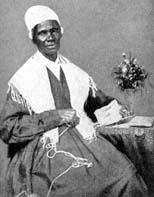
Ain't I A Woman?


Ain’t I a Woman?
Sojourner Truth
(1797-1883)


That man over there says
That women need to be helped into carriages
And lifted over ditches,
And to have the best place everywhere

Nobody ever helps me into carriages
Or over mud-puddles,
Or gives me any best place!
And ain’t I a woman?

Look at me!
Look at my arm!
I have ploughed and planted,
And gathered into barns,
And no man could head me!
And ain’t I a woman?

I could work as much and eat as much as a man
When I could get it
And bear the lash as well
And ain’t I a woman?

I have borne thirteen children
And seen them most all sold off to slavery
And when I cried out with my mother’s grief
None but Jesus heard m1!
And ain’t I a woman?

That little man in black there,
He says women can’t have
As much rights as men
‘cause Christ wasn’t a woman!

Where did your Christ come from?
From God and a woman!
Man had nothing to do with Him!

If the first woman God ever made
Was strong enough to turn the world
Upside down all alone
These women together ought to be able to turn it back
And get it right side up again!
And now they is asking to do it
The men better let them.

Sojourner Truth, born as Isabella in Hurley, Ulster County, New York, was one early abolitionist and feminist in America. Before fleeing herself to freedom in 1827, she was a slave and had already witnessed the sale of two of her surviving children when she settled as a domestic servant with her youngest son and daughter in New York City around 1829.

In her most well-known speech above—Ain’t I a woman? we can see how she criticized the unfair treatment toward the Negro women confronted the appearance of the Cult of True Womanhood in the beginning of the nineteenth century.

One impact resulted in the Industrial Revolution in the beginning of the nineteenth America is the domesticity of women. Society considered women as the weaker sex so that women needed to be protected. While in the previous centuries women together with men could be the breadwinner for the family (such as doing agriculture, home industry), the industrial revolution with the establishing of factories spread all over America gave ideas to men to domesticate women at home and be the breeder, the cook, and the exclusive servant for the husband and the children they delivered. The reason—just like the reason mostly used by selfish men nowadays—was that men were already outside of home most of the time so that women had to stay home to take care of the children.

However, such principles were not applied to all women; they were only for white women coming from the middle and high social class. The “protection” was only given to them, but not to others, let’s say white women from low social class (e.g. the new immigrant who had to work hard to survive) and Negro women. This is exactly what Sojourner Truth criticized in her speech.

The impact of this application is:

For white women coming from middle and high social class, gradually working outside home was something coveted very much after they were bored to be domesticated and “protected”. Therefore they struggled to get their rights to be equal with men by pursuing career outside home. This could be seen as the one struggled by the second wave feminist movement in 1960s.
For Negro women—and also for women coming from low social class, working hard outside home bored them and they considered being a housewife—being idle, “only” doing household chores they believed not as hard as working outside to augment the income—as something luxurious. On the contrary of the white women coming from middle and high social class, they struggled something different.

Going back to Sojourner Truth’s speech, she also criticized the religious bodies that put women in the lower position than men with reason that Christ was a man. I am of opinion that Muslim women can also use the similar reason to respond Muslim men’s accusation that women are not as capable as men to be leaders or to have equal rights as men to pursue career outside home coz all prophets Muslim people know were men. Those selfish men use this “weapon” to eliminate any struggle for women to be leaders. As Amina Wadud illustrates in her book Quran and Woman: Rereading the Sacred Text from A Woman’s Perspective that men want to ignore the existence of women as the leaders in Alquran in order that men will always become the leaders in this world and women will only be the followers.

PT56 12.37 150706