Search This Blog

Thursday, April 23, 2026

The Imitation Game

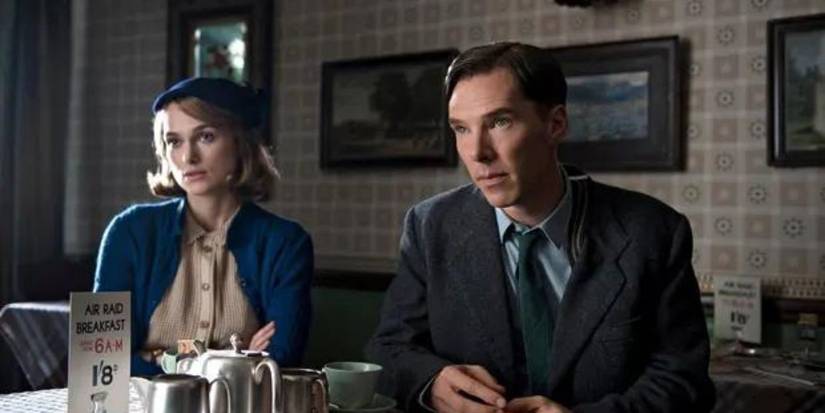
Alan Turing an Joan Clarke sitting at a table in The Imitation Game
Knightley and Cumberbatch in 'The Imitation Game'


In fact, I am not really into movies; therefore, in my entire life for almost 60 years, I don't watch a lot of movies. This became my excuse to say that just two days ago -- April 21 2026 -- I 'found' a movie entitled THE IMITATION GAME, which was released in 2014 when scrolling youtube. 2 actors playing there -- Benedict Cumberbatch and Keira Knightley -- attracted me more to watch it.


The beginning note appeared saying that the movie was based on a true story made me feel excited, I became more dumbfounded when finding out that Benedict played as Alan Turing, a mathematician who invented computer! (pardon me for being so 'late' to know and watch this movie! Lol) o my god. I remember the time when I let myself spend hours a day on one social media; some people mentioned Alan Turing's name as a whiz, some others despised him as being a gay. (FYI, this is in Indonesia.) this kinda useless 'debate' went on and on and on. People who love using this latest technology but despise homosexuality keep creating excuses to accept the fact that Turing was one important persona in inventing computer.


The first impression Turing -- or you can say Cumberbatch -- gave me in the beginning of the movie was that this man was really a smart cookie, a prodigy that was on par with Einstein! The way the movie illustrated Turing as a nerd who was not so social justified my idea that a genius was usually a nerd, despite the fact that some people say the real Turing was not that nerd as Turing in this movie.


The next impression was heart-breaking for me: when I knew that Turing was punished for his being homosexual by the British government. (Being a homosexual was considered a criminal in British law back then.) How the British government didn't appreciate Turing for what he had done -- to break the code of Enigma that resulted in the shorter period of the WW was almost impossible for me. The ability of Turing (and his co-workers) to decode Enigma -- that resulted in saving thousands of lives -- didn't help to save him from being injected with 'hormone therapy' to 'cure' his homosexuality. (so, in fact, homosexuality was analogous with crime or disease?)


13 years after Turing passing, the British government passed the Sexual Offences Act, decriminalizing homosexual acts in private between two consenting men over 21 in England and Wales.


In 2009 British Prime Minister Gordon Brown, speaking on behalf of the British government, publicly apologized for Turing's "utterly unfair" treatment.


46 years after the Sexual Offences Act passed, Queen Elizabeth II granted Turing aroyal pardon.


And just yesterday, in 2026, I happened to read a thread where (Indonesian) people still considered homosexuality a disease. More than a thousand likes on the thread, and hundreds of comments agreed with it. (sigh ~~)


PT56 13.53 23 April 2026


Alan Turing
Alan Turing


Wednesday, April 22, 2026

Beauty is in the eye of the beholder

 I copied the following article from this link.

It’s All Relative: How Beauty Standards Have Evolved Throughout History

JournalBoudoir

As a boudoir photographer, I’m constantly hearing women talk in depth about the parts of their bodies they don’t like. 

“I hate my arm flab.” 

“My boobs are so small. I look like a man.” 

“Maybe I should wait until I’ve lost another ten pounds before we schedule the shoot.” 

“Make sure my hair stays in place so you can’t see how big my forehead is.” 

I’ve heard women criticize themselves over things that I didn’t even know you could be insecure about, like the shape of their nail beds, or having “asymmetrical lips”, or the dimples on the small of their backs (or lack thereof). The things some people consider to be beautiful, others see as mere flaws, and this is nothing new. Humankind’s beauty standards have always changed from decade to decade and from country to country. 

Some of us are convinced that we are just objectively unattractive when in reality, beauty is completely relative. Just because we were born into a time where our physical traits weren’t in fashion doesn’t mean that we are any less beautiful than those women who were lucky enough to be born during a time where their appearance is in favor. Almost every woman alive today would have fit the mold of the “ideal” woman during one era or another. 

As I wrote this post, I had each and every woman I’ve ever worked with in mind; not only do I truly think all women are beautiful in their own unique ways, but I also think that the things we dislike about ourselves are often the things that make us beautiful in someone else’s eyes. 


25,000 BCE


Behold: the Venus of Willendorf, the heavily idealized standard of beauty during the Paleolithic, or “Old Stone Age”. Though she may not be what we think of today when we imagine an “idealized” woman, this is, in fact, what a desirable woman would look like during this time. The fact that her face is completely absent and the arms are so small and unpronounced tells us that the artist’s aim wasn’t to create a meaningful portrait of a real person, but to create a sculpture emphasizing the most sexually appealing parts of a woman’s anatomy – large breasts, thighs, stomach, and pronounced genitals. Fertility sculptures that are almost identical to this one have been found in excavation sites all around the world, all dating back to this time period.

1550 BCE

Women and men in ancient Egypt were in many ways seen as equals, but not when it came to beauty. While men were expected to have a reddish-brown skin tone, a woman’s complexion would ideally be more of a light golden tan. Men were expected to have angular bodies with broad shoulders, and a desirable woman’s body was more soft and rounded. A pronounced stomach and a plump, slightly sagging butt were nothing to be ashamed of, in fact, they were greatly admired!

300 BCE

What better example of the ideal woman in ancient Greece can you think of than Aphrodite, the goddess of beauty? And is she depicted with a six-pack and huge boobs? Of course not. Aphrodite, the epitome of physical perfection, is portrayed with distinct stomach rolls as she crouches. I don’t know about you, but if stomach rolls are good enough for the goddess of beauty, they’re good enough for me.

In ancient Greece, the ideal woman was plump, with wide hips and small breasts. Being beautiful was very important in Greek culture, and many women were willing to sacrifice their health in pursuit of physical perfection. Women would sometimes coat their skin in makeup made with white lead (which happens to be toxic). Blondes and redheads were considered to be especially beautiful, so women would sometimes bleach their hair with vinegar (which often caused hair loss). As for facial features, a prominent nose and small lips were the most favorable.

800 AD

Vikings sometimes get a bad wrap, being labeled as brutal savages who did nothing but pillage, murder, and rape. But, when you compare their way of life with the cultural norms of the rest of the Western world at the time, they were actually much more civilized than people realize. Unlike the other settlements and countries throughout the rest of Europe, women in Scandinavia had many rights; the right to own land, the right to request a divorce, and the right to join the men on raids. Additionally, the Vikings valued personal care more than most peoples of the time. While most Europeans of the era never bathed a day in their lives, Viking women often bathed as frequently as once a week, taking exceptional pride in maintaining long, shiny hair. Women were admired for having bright white arms, which, again, may have been due to their “obsession” with appearing to be as clean as possible, since most cultures at the time viewed dark skin as a sign of poverty or poor hygiene.

1400

During the Renaissance, large foreheads were thought to be a sign of great beauty, and although blonde hair was all the rage, women would often pluck their hairlines back and thin their eyebrows in order to make their foreheads appear larger. Pear-shaped women were thought to be the most beautiful; women were proud of their curvy hips and thighs, but would flatten their chests with tightly bound corsets.

1790

Queen Louise of Prussia, pictured above, was widely considered to be the most beautiful woman in Europe during the Georgian era. During the 1700’s and early 1800’s, “beauty” was synonymous with “proportion”. A conventionally beautiful woman was neither too tall nor too short, neither “too thin” nor “too plump”, with a long neck, large breasts, and a tapered waist. Much like in ancient Greece, a prominent nose and small lips were considered to be very beautiful, as was a round face with a slight double chin.

1880

During the Victorian Era, men wanted women who fit the role of the “damsel in distress”; women who needed to rely on strong men to protect them. Because of this, women were expected to be feminine, delicate, and even sickly. During the 1880s, women desired an “s-shaped” silhouette, and in addition to tight corsets that accentuated the waist and lifted the breasts, women wore dresses with layers upon layers of ruffles that gave the illusion of a larger, more exaggerated butt. Due to their incredibly tight corsets, it was often difficult for women to breathe, which made fainting spells a common occurrence. This contributed to the perpetuation of the idea that frailty was a trait of beautiful women. Few women wore makeup, and those who did usually only wore rouge and eyeliner, which also contributed to that look of emaciation and illness that was considered to be attractive.

1920

In contrast with the femininity that was expected of women in the Victorian era, androgeny was all the rage during the 1920s. For the first time in hundreds of years, women were ditching their corsets, which were too restrictive for the active lifestyle of this new generation of wild, rule-breaking women. Curves were no longer in vogue; women aimed to maintain a slender figure and wore loose, shapeless dresses that understated and hid any natural curves. Some “radical” women began wearing pants (several of whom were arrested for “cross-dressing”). In another act of rebellion, women began cutting their hair short, which was shocking and offensive to both men and women of older generations. Keep in mind, despite the fact that women had just won the right to vote, many people still felt that women were the inferior sex and that they could never be seen as equals to men. Because of this, there was an underlying societal pressure for women to prove that they were just as capable and intelligent as men, often by downplaying the qualities that made them conventionally feminine, and this heavily influenced the beauty standards of the time.

1950

By the 1950s, the world had changed in very dramatic ways. The Great Depression and World War Two had taken a toll on the economy, forcing women in the 1940s to make due with what they had. Because of rationing, women would use eyebrow pencils to draw “seams” up the backs of their legs to make it look like they were wearing nylons, and they began making alterations on men’s suits to repurpose them into dresses (which led to the very popular trend of wearing padded shoulders). But by the 50s, the economy was booming for the first time in decades. The beauty industry took off like never before, providing fashionable dresses and cosmetics at affordable prices to women of every class. The availability of these products, amongst other factors, created a societal expectation for women to “keep up appearances”, and always look their best. Full lips with bright red lipstick were the new trend, as well as voluminous hairstyles. As women began gaining a little more weight (due to the fact that food was no longer being rationed, as it had been in the previous decade), the hourglass figure became the most desirable shape, which brought about the re-popularization of corsets. Contrary to popular belief, “plus-sized” women were not the ideal of the time, at least, not what we could consider today to be “plus-sized”. Women still wanted thin arms and legs, as well as a tiny waist, but they also wanted large breasts and round hips. By today’s standards, the ideal women in the 1950s were still quite thin.

In recent years, we’ve made leaps and bounds when it comes to expanding our ideas of what we consider to be “beautiful”. For the first time ever, the media has begun representing women of many different sizes, shapes, complexions, sexual orientations, etc. in their advertising. We still have preconceptions that have been ingrained into our cultural consciousness about who the most beautiful women are, and we still have a long way to go when it comes to accepting that beauty comes in many forms, but I’m optimistic about the coming years. 


So, what can we learn from this? When it comes to beauty, there is no set of rules. In 100, 200, 300 years from now, the physical qualities that our society glorifies will fall out of fashion and traits that we typically think of as “unattractive” will become the new gold standard. Our perception of beauty is not based in fact, but rather, an ever-changing set of societal opinions that ultimately mean nothing. 

Whether you feel that our culture affirms or denies this, you are beautiful. I encourage you to show yourself a little love this week, whether it’s booking a boudoir session, buying a new dress that makes you feel great about your body, meditating, or whatever makes you feel like the best version of yourself.

 

Tuesday, February 10, 2026

Grey Divorce


How well do you think you know your partner?


I have known this stuff  (people do not always know well their partners) since time immemorial for sure. Nevertheless many people do not consider it a kind of problem in a relationship. Some reasons for this, perhaps, because they believe that 'what has been united by God must stay the way it is' (for Christians?) and a kind of social pressure that 'you must be loyal to your spouse no matter what has happened in your marriage in order to be considered you are a good man/woman.' (This kind of social pressure does not only belong to women, does it?)


I was kinda appalled by this (again) when I accidentally 'found' a film entitled HOPE GAP. Edward and Grace who have been married for 29 years finally got separated. Is it only because for the past one year Edward has been seeing another woman?


Grace: "We have been married for 29 years!"

Edward: "I have tried (surviving in this marriage) for 29 years!"


I came to think that in fact Edward had realized much earlier that their marriage didn't run well, one thing that Grace didn't realize! However, Edward was a type of a man who could not say forward to his wife about how he felt. Grace, on the other way around, had been busy with her own way of thinking that everything was okay. The only thing that was not okay was Edward who could not balance her 'emotion'. Edward would rather be quiet than talk openly when things got strained between them. Perhaps because he realized that there was no use to talk to the dominant Grace?


(to some extent, this reminded me of my (first) marriage. My ex would rather be quiet than respond to me. The difference was: Edward left Grace, I divorced my ex. The reaction of my ex was somewhat similar to Grace's: refused to be separated.)


I am of opinion that I could blame our intellectual gap. Grace blamed Edward who chose to live with another woman.


In one conversation with Jamie, the son, Edward said he believed that Grace only loved the idea' of a man she invented in Edward, not the real Edward; he used to believe his (old) feeling toward Grace as love but he was wrong. They both never really loved each other as a couple.


N.B.:

You may read about grey divorce in this link.


MS48 - MS 58 15.10 10 February 2026


N.B. (2):

I am very much impressed with what Angela said to Grace, "prior to the separation, there were three unhappy people. now, there is only one." that statement seemed to be able to make Grace realize that no matter what, she has lost Edward. Edward would never come back to her.  (she really did not understand Edward though she claimed she loved him.)


Monday, November 03, 2025

Why did Big reject Samantha in episode 1 SATC?

Big in episode 1, season 1 of SATC


Why did Big reject Samantha in episode 1?


I believe this is not a new topic to be discussed/written. My naïvete hampered me from thinking too bold, lol. This is triggered one fact: despite the fact that Samantha is very inspiring for me; I am more like Carrie than Samantha who is bold, highly confident, successful. Carrie is not as bold or 'up-to-date' as Samantha, although once Aidan said to Carrie, "you are anything but conventional, Carrie."


One time I read somewhere about Chris Noth's comment on his character Big: "Big is not shown to have many girlfriends. It is different from Carrie who has some (or many?) boyfriends in the serials of Sex and the City. After getting divorced from Samantha, he didn't have any other girlfriend, except sometimes pursuing Carrie."


However, a lot of people see Big a player, just like Samantha. And because Big is a successful entrepeneur, he is quite popular in many business communities, and so is Samantha who is well-known as successful PR. If Big accepts Samantha's flirtatious invitation in episode 1, his business associates will easily find out about it. It can threaten his business.


Big may find Samantha intimidating (with her boldness to invite him to bed) because Big would rather choose to be with a woman who is 'under his control' but at the same time 'easy to be taken into his bed'. After Big and Carrie have their relationship, and Big finds out that Carrie is not 'that easy' to control, he chooses to marry Natasha, a kinda 'classic' woman: young, gorgeous, not that smart (meaning easily to be manipulated), and submissive. Here, we can say that Big belongs to a type of man who is also classic. He views women who are smart, independent and successful (in career + money) as threat.


There are many men who have trait like Big in Indonesia! They don't have guts to face smart, independent and successful women because these woman are not easily manipulated. Isn't there any man who is on the way around? I believe there are but I haven't found them yet in my real life. I am not Samantha. This is why. Lol.


PT56 14.00 03 November 2025 


P.S.:

perhaps you consider visiting this link? 😀 


Friday, August 15, 2025

Sex is (not) love


This meme has been viralized for years. I believe you have seen this before. I believe it is a good thing to teach our youngsters about this: sex is not love; dating is not love. So, those youngsters will not confuse sex/dating with love.

However, do you agree if I say that sex/lovemaking can be one form of showing deep devotion to the one we love? When we are deeply in love with someone, don't you think it is very understandable that we want to make love to him/her to show how much we want to give pleasure to our loved one? Are you familiar with a statement, "let us consummate our love!" for lovers who happen to live in two distant places, and when they meet, they want to perfect their love by making love? 

So? to some extent, sex or lovemaking is also love.

MS48 15.18 15 August 2025

Wednesday, August 13, 2025

How (un)sexual are you?


Samantha and Siddharta

In the DROUGHT, episode 11 from season 1 Sex and the City, Carrie said that New York is about sex; people getting it, people trying to get it, and people who can't get it. In this episode, each main character has their own sex problems: (1) Carrie stopped having sex with her 'perfect' boyfriend after she accidentally farted in front of Big. (and the trigger she farted was that she felt too comfortable in their relationship!) (2) when Carrie didn't have sex with Big for 3 days in a row, Miranda didn't have sex at all for three months. This seemingly trivial problem made them quarrel a bit. Farting was something human so it was okay for Carrie to fart; this is Miranda's opinion. On the other hand, Carrie considered it a big problem because after she farted, Big seemed to lose his interest to have sex with Carrie.


"Not doing it when you are with someone means much more than not doing it when you are not with someone."


Then two of them continued talking about it, till Carrie asked, "is it normal to be in the same bed and not do it?"


Miranda responded, "it depends on what is normal for you." everybody has his/her own opinion/measurement what is normal, for sure; or how many times someone has sex in a day / a week / a month; or how long someone can stand not having it.


To entertain herself, Miranda rented some videos at Blockbuster to watch. Coincidentally, somewhere near Blockbuster, there were some guys working on the street catcalled Miranda. They seemed to know that Miranda was entertaining herself in order not to think about sex all the time. However, when Miranda responded to those man, they retreated. One of them, "Relax, lady. I am married." This made Miranda mock them 😁


Samantha -- who seemed to avoid having one steady partner to have sex -- was trying to seduce Siddharta, her yoga instructor. Unfortunately, instead of following Samantha's sexual need, Siddharta even taught her how to control her libido. Siddharta claimed that he used to be fond of sex too until he thought that his need of sex was a problem (he said it was all just ego.) so he started practicing celibacy. Interestingly, Samantha was interested in practicing it, though it was hard. (Can we interpret it that to some extent, Samantha agrred with Siddharta that having high sexual drive is sometimes troublesome?)


After a few days, Samantha eventually could not control herself. She invited one man in her yoga class to have sex. She did it in front of Siddharta. When seeing Samantha and that man left his yoga class, Siddharta was dumbfounded, his face was sweating.


Charlotte got a new boyfriend in this episode. Without her knowing, Kevin used to go out with Carrie. Carrie dumped him because he was a sex maniac. Nevertheless, with Charlotte, Kevin was a different person. He was no longer sex maniac. Realizing that his sexual drive put him in trouble, Kevin consumed prozac. He thought in a relationship, sex was not important, more important was how a man treated his woman with kindness. Unfortunately, this even made Charlotte decide to dump him. 


See? Women also need sex in a relationship.


*******


When watching this episode for the first time several years ago, innocently I thought it would only happen in western countries, lol. However, recently, a good friend of mine once in a while tells me about her coach in the fitness center where she is a member. This coach is really addicted to sex. Interestingly, instead of having one steady sex partner, just like Samantha, she likes doing it with someone whom she happens to meet somewhere, for example when going traveling to Bali, let's say. Or sometimes she looks for dates online. Sounds very westernized, doesn't it? 🤪 or am I just outdated now? 🫢😑🤪


It reminded me of my discussion with some students of mine long time ago. Some male students said that no matter how much they needed sex, they were scared of sexually transmitted diseases. This stopped them from being promiscuous.


MS48 14.09 13 August 2025


Friday, July 18, 2025

Opinion


the pic was taken from here

"The belief that one's own view of reality is the only reality is the most dangerous of all delusions." ~ Paul Watzlawick ~


Reading the above-mentioned quote, I remember one short scene in SATC. In the scene, Carrie was together with Aleksander, one boyfriend of hers in the season 6. they were with Aleksander's workmates. One topic they discussed was their hostility towards people's opinion on something. When they asked Carrie, she responded, "I cannot answer that question because I am a writer where in my writings, I depend on people's opinion."


In this era, one view of (the so-called) reality can be, in fact, just an opinion or assumption. And Carrie's response struck me. Most writings of mine are based on opinion, even worse perhaps just based one assumption. This is why recently I have reduced my time to write for blogs. Perhaps it will be better if I 'hide' my opinion or assumption behind fiction. And I am not good at all to write fiction.


PT56 20.10 18 July 2025